Account holders at Directed IRA can use Roth IRAs to invest in alternative assets such as real estate, small business, crypto, private lending, and more. Contributions and earnings in a self-directed Roth IRA grow tax-free, allowing tax-free withdrawals at age 59 ½.
A Roth IRA is a type of individual retirement account that allows you to contribute after-tax dollars, meaning you don’t get a tax deduction for contributions like you would a Traditional IRA. The big advantage of the Roth IRA is that the income, gains, and growth in your Roth IRA come out entirely tax-free at age 59 ½. In order get tax-free withdrawals on the earnings, you must have a Roth IRA, any Roth IRA, for at least 5 years before you can take tax-free withdrawals.
More than 24% of U.S. households own Roth IRAs—making it the Nation’s third most popular retirement account behind 401(k)s and Traditional IRAs. At Directed IRA, the Roth IRA is the most popular account type as self-directed investors hope to build a large account with above market returns that they can rely on in retirement without being subject to taxes on distributions in retirement (as occurs with a traditional IRA).
Can I self-direct my existing Roth IRA?
Most Roth IRA providers are brokers or banks and limit your investment options to stocks, ETFs, and mutual funds. If you want to invest in an alternative asset like real estate, private funds, or start-ups, you will need to open a self-directed Roth IRA with Directed IRA and then we assist in transferring over your existing Roth IRA funds. There is no penalty or tax to move funds from one Roth IRA custodian to another and you can move the entire balance or a partial amount depending on how much you plan to self-direct in your Roth IRA at Directed IRA.
Features & Advantages of a Roth IRA

Open a Self-Directed Roth IRA
• New Roth IRAs can be opened in less than 5 minutes using our online portal. Fill out a new account application or book a call to speak to our team, go over your questions, and get started.

Fund Your Account
• Fund your self-directed Roth IRA by transferring from an existing IRA, rollover from a 401(k) or other employer plan, or make a new contribution (ACH, Check, Wire).

Start Investing
• Account holders at Directed IRA can invest in any asset allowed by law. This includes alternative assets like real estate, private companies and funds, precious metals, private equity, start-ups, and more.

The IRS sets contribution limits for Roth IRAs, which can change periodically, so it’s important to stay informed about the latest guidelines.
Anyone can have a Roth IRA but you can only make new contributions to the Roth IRA if you have earned income (salary, wages, self-employment income). To contribute directly, your Modified Adjusted Gross Income (MAGI) must fall within specific limits set by the IRS. If your income exceeds these thresholds, you may not contribute directly to a Roth IRA. However, high-income earners can still take advantage of a Backdoor Roth IRA. This strategy involves making a non-deductible contribution to a Traditional IRA and then converting those funds into a Roth IRA.
Yes, a Traditional IRA can be converted to a Roth IRA by performing a “Roth conversion.” You’ll need to pay taxes on the converted amount for the tax year of the conversion, but the funds will grow tax-free from that point forward. For those who believe tax rates will be greater in retirement or who believe they can exponentially grow their account, converting at a lower value or lower tax rate is a a popular strategy.
The primary difference between Self-Directed Roth IRAs (SDIRAs) and Brokerage IRAs (regular IRAs) is their range of investment options. An SDIRA is any IRA (roth or traditional) administered by an IRA custodian who allows the IRA owner to invest in any asset allowed by law and who doesn’t restrict you to brokerage products only. Common investment asset choices for SDIRAs include real estate, notes, private funds (VC, PE), LLCs, and precious metals. You can also invest in crypto with your IRA using our Crypto IRA. The flexibility of an SDIRA lets investors take control of their retirement by investing in alternative assets—while Brokerage IRAs typically restrict an investor’s options to conventional assets like stocks, bonds, and mutual funds.
No, Directed IRA does not sell investments. As an industry-leading SDIRA custodian, Directed IRA provides the account custodial services and required IRS reporting for investors to self-direct their accounts into investments of their choosing. All account holders at Directed IRA must find, vet, and secure each investment for their self-directed IRA. Directed IRA offers many educational resources covering the complexities of self-directing and can help you every step of the way but does not offer investment, tax, or legal advice and does not provide or endorse any investment option.
Follow these steps to self-direct your account at Directed IRA:
At Directed IRA, we believe in keeping SDIRAs simple and affordable for everyone! Our pricing structure for all account types is straightforward, with no surprises. Unlike some competitors—fees will not increase based on the value of your account. Learn more.
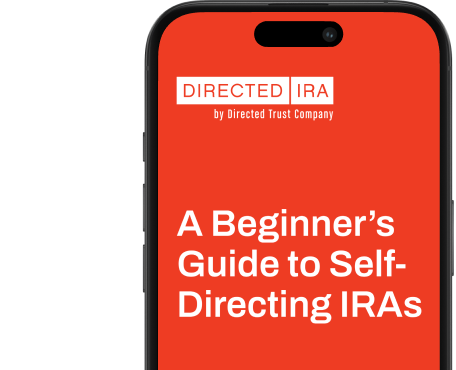


New to self-directed retirement accounts? These resources are designed to help you understand the fundamentals and get started the right way.
Access curated webinars, guides, and educational content covering investment options, account structures, and the rules that govern self-directed IRAs.
Mat Sorensen, Attorney, CEO, and Founder of Directed IRA, wrote the #1 book on self-directed IRAs – selling over 50,000 copies nationwide. The Self Directed IRA Handbook is a comprehensive guide written for both investors and advisors alike. Get access to your SDIRA Handbook resources today!
Mat Sorensen, Attorney, CEO, and Founder of Directed IRA, wrote the #1 book on self-directed IRAs – selling over 50,000 copies nationwide. The Self Directed IRA Handbook is a comprehensive guide written for both investors and advisors alike. Download your free copy today!