Account holders at Directed IRA can use Traditional IRAs to invest in alternative assets such as real estate, startups, precious metals, crypto, private funds, and more. Contributions to a self-directed Traditional IRA grow tax-deferred, allowing you to lower your taxable income now and pay taxes on withdrawals in retirement.
A Traditional IRA is an individual retirement account that allows you to contribute pre-tax dollars, giving most contributors an immediate tax break. For example, if you contributed $7,000 to your traditional IRA you would get a $7,000 tax deduction on your tax return. Investments in your account can then grow tax-deferred, meaning you won’t pay taxes on earnings until you withdraw funds in retirement. This allows the returns and gains that are earned to be reinvested, without paying taxes as you are building the account. You do take distributions into income at retirement, and this is why traditional IRAs are often referred to as tax-deferred accounts.
As of 2024, more than 33% of U.S. households own an IRA—making it the most popular retirement account option for individuals outside of an employer 401(k). Traditional IRAs were the first IRA established and were rolled out in 1974 as part of the Employee Retirement Income Security Act (ERISA) to encourage individual retirement saving. Traditional retirement accounts are common among individuals seeking an immediate tax advantage and prefer to delay taxes until retirement when they may be in a lower tax bracket.
Can I self-direct my existing Traditional IRA?
Most Traditional IRA providers are brokers or banks and limit your investment options to stocks, ETFs, and mutual funds. If you want to invest in alternative assets like real estate, private funds, or start-ups, you can open a self-directed Traditional IRA with Directed IRA, and we’ll assist you in transferring your existing Traditional IRA funds. There is no penalty or tax to transfer funds from one Traditional IRA custodian to another, and you can move the entire balance or just a portion, depending on how much you want to self-direct in your Traditional IRA at Directed IRA.
Features & Advantages of a Traditional IRA
• Tax-Deferred Growth: Contributions to a Traditional IRA grow tax-deferred, meaning earnings such as interest, dividends, and capital gains aren’t taxed until withdrawn. This allows your investments to compound without the drag of yearly taxes.
• Tax-Deductible Contributions: Contributions may be fully or partially tax-deductible, depending on your income and participation in an employer-sponsored retirement plan. This upfront tax deduction can lower your taxable income, providing immediate savings.
• Required Minimum Distributions (RMDs): Traditional IRAs require RMDs starting at age 73.
• Alternative Asset Investments: Like Roth IRAs, Traditional IRAs can also be self-directed into alternative assets like real estate, private funds, startups, and more. To self-direct your IRA, you must open an account with an IRA custodian who allows these types of investments.
• Higher Contribution Limits for Older Investors: If you’re 50 or older, you can take advantage of catch-up contributions, increasing your total contribution limit to save more for retirement.
• Flexibility Rolling Over Funds: Funds can be moved from a 401(k) or other retirement account into a Traditional IRA without penalty or tax, allowing you to consolidate your savings into one account. This is particularly helpful for those who want to rollover funds to a self-directed IRA.
• Penalty-Free Withdrawals for Qualified Expenses: Although withdrawing funds before age 59½ typically incurs a penalty or tax, exceptions exist for situations like first-time home purchases, qualified education expenses, or significant medical costs.
• Traditional-to-Roth Conversions: You can convert funds from a Traditional IRA to a Roth IRA, paying taxes on the converted amount in the year of the conversion. This allows for future tax-free growth and withdrawals under Roth rules.

Open a Self-Directed Traditional IRA
• New Traditional IRAs can be opened in less than 5 minutes using our online portal. Fill out a new account application or book a call to speak to our team, go over your questions, and get started.

Fund Your Account
• Fund your self-directed Traditional IRA by transferring from an existing IRA, rollover from a 401(k) or other employer plan, or make a new contribution (ACH, Check, Wire).

Invest Your Account
• Account holders at Directed IRA can invest in any asset allowed by law. This includes alternative assets like real estate, private companies and funds, precious metals, private equity, start-ups, and more.

The IRS sets contribution limits for Traditional IRAs, which may change periodically, so it’s important to check the latest guidelines to stay informed. Can anyone have a Traditional IRA? Yes, anyone can own a Traditional IRA but in order to make new contributions you must have earned income. Usually, your contributions to a traditional IRA are deductible but it depends on your income level and whether you or your spouse are covered by a retirement plan at work. The IRS provides specific income limits and details to determine deductibility.
If you trade on the mobile app or Basic Web trade interfaces with Gemini, this will result in higher fees per trade. What about Storage Fees? No. There are no additional storage fees to store your crypto on the Gemini exchange.
The primary difference between Self-Directed Traditional IRAs (SDIRAs) and Brokerage IRAs (regular IRAs) is their range of investment options. An SDIRA allows you to invest in alternative assets such as real estate, private funds, notes, precious metals, and even cryptocurrency, while Brokerage IRAs are typically limited to stocks, bonds, and mutual funds. With an SDIRA, you have more control over your retirement investments and the flexibility to explore alternative assets.
No, Directed IRA does not sell investments. As an SDIRA custodian, Directed IRA provides the account custodial services and required IRS reporting for investors to self-direct their accounts into investments of their choosing. However, you are responsible for finding, vetting, and securing your own investments. Directed IRA offers educational resources to help you navigate self-directing but does not provide investment, tax, or legal advice, nor does it endorse any specific investments.
Follow these steps to self-direct your account at Directed IRA:
1. Open Your Account: You must have an existing account at Directed IRA before investing. This process takes a few minutes and can be done online. Choose from your preferred account type and book a call if you need help.
2. Fund Your Account: Add funds to your account by making a new contribution, transferring funds from an existing retirement account, or by initiating a rollover. All of these can be done from our funding page.
3. Invest Your Account: Choose your preferred investment, such as real estate, private funds, precious metals, or notes. Ensure your investment complies with IRS regulations. Then, submit all necessary paperwork to Directed IRA, ensuring it’s titled in the name of your IRA. Directed IRA will review, process, and execute the investment on your behalf.
At Directed IRA, we believe in keeping SDIRAs simple and affordable for everyone! Our pricing structure for all account types is straightforward, with no surprises. Unlike some competitors—fees will not increase based on the value of your account. Learn more.
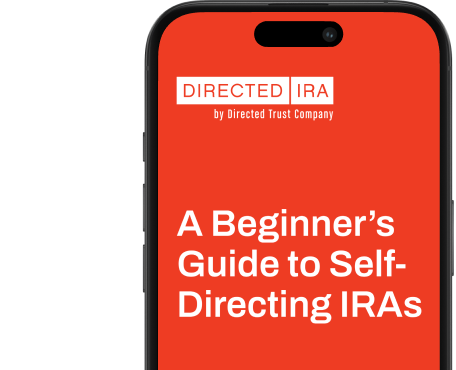


New to self-directed retirement accounts? These resources are designed to help you understand the fundamentals and get started the right way.
Access curated webinars, guides, and educational content covering investment options, account structures, and the rules that govern self-directed IRAs.
Mat Sorensen, Attorney, CEO, and Founder of Directed IRA, wrote the #1 book on self-directed IRAs – selling over 50,000 copies nationwide. The Self Directed IRA Handbook is a comprehensive guide written for both investors and advisors alike. Get access to your SDIRA Handbook resources today!
Mat Sorensen, Attorney, CEO, and Founder of Directed IRA, wrote the #1 book on self-directed IRAs – selling over 50,000 copies nationwide. The Self Directed IRA Handbook is a comprehensive guide written for both investors and advisors alike. Download your free copy today!