

HSA limits increase as well, while Traditional and Roth IRA limits remain unchanged.
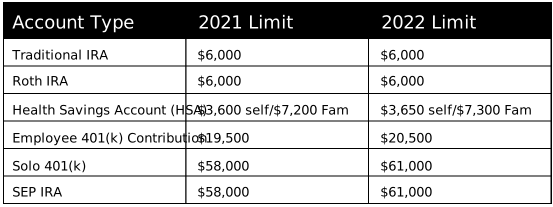
The IRS increased 2022 contribution limits for self-employed persons who contribute to a SEP IRA or Solo 401(k) from $58,000 to $61,000. For those 50 or older, there is also a $6,500 catch-up contribution amount allowing total contributions in 2021 of $67,500. The SEP IRA and the Solo 401(k) have become popular savings tools for self-employed persons who don’t have an employer 401(k) plan, as they allow them to contribute more than the annual $6,000 contribution that is allowed in a Traditional IRA or Roth IRA. Solo 401(k)s and SEP IRAs are also easier to administer than pension plans, and standard 401(k)s and have proven to be an optimal fit for self-employed persons who do not have full-time employees other than themselves, partners, and family.
The IRS did not change 2022 contribution limits on Traditional IRAs and Roth IRAs and those amounts remain at 2021 levels of $6,000 annually, with a $1,000 catch-up for those 50 or older. The 2022 income phaseout for Roth IRA contributions begins at $129,000 for singles and heads of household and starts to phase out at $204,000 for married couples filing jointly. If you phase out for standard Roth IRA contributions because you are high-income, you can contribute using the back-door Roth IRA method.
Employee contribution limits to 401(k)s were increased in 2022 to $20,500 from $19,500 in 2021. HSA contribution limits for 2021 will go up from $3,600 individual to $3,650, and family contributions will increase from $7,200 to $7,300.
2022 Contribution Limits
All of these accounts provide tax preferences and benefits over a typical savings account. The HSA, Traditional IRA, Solo 401(k), and SEP IRA all provide tax deductions when you contribute to them and the funds grow tax-deferred. For Roth IRAs and Roth accounts in Solo 401(k)s, there is no tax deduction on your contributions, but the funds grow and come out tax-free at retirement. One of the most significant costs to growing wealth and assets for retirement is taxes. These accounts all provide tax advantages over typical savings and brokerage accounts with non-retirement account dollars.
If you are looking for tax deductions, tax-deferred growth, or tax-free income, you should be using these accounts. Keep in mind there are qualifications and phase-out rules that apply, so make sure you are getting competent advice about which accounts should be utilized in your specific situation. And lastly, the power in using these accounts is in maximizing the investment returns. All these accounts can be self-directed and invested into assets you know best. When you contribute funds into these accounts, those funds can be invested to grow. You can then invest in the public stock, ETFs, and mutual funds, but also into real estate, private companies and funds (LPs and LLCs), and small businesses using self-directed account providers. Consider your investment options wisely, and seek out professional advice as needed to become educated and informed on how to best achieve your financial goals.